



Why to Use Foam Adhesive for Facade Insulation Works
15.09.2026
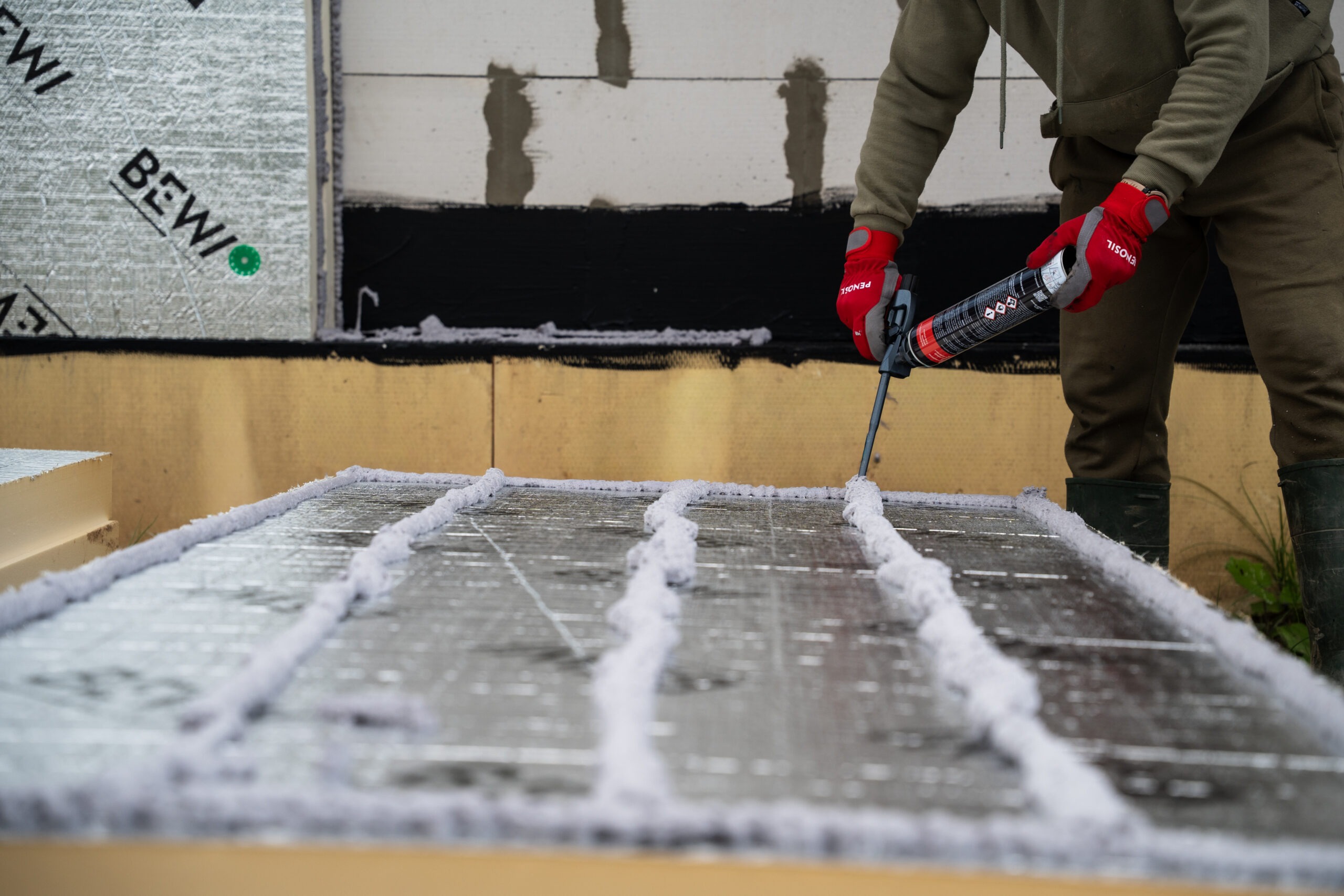
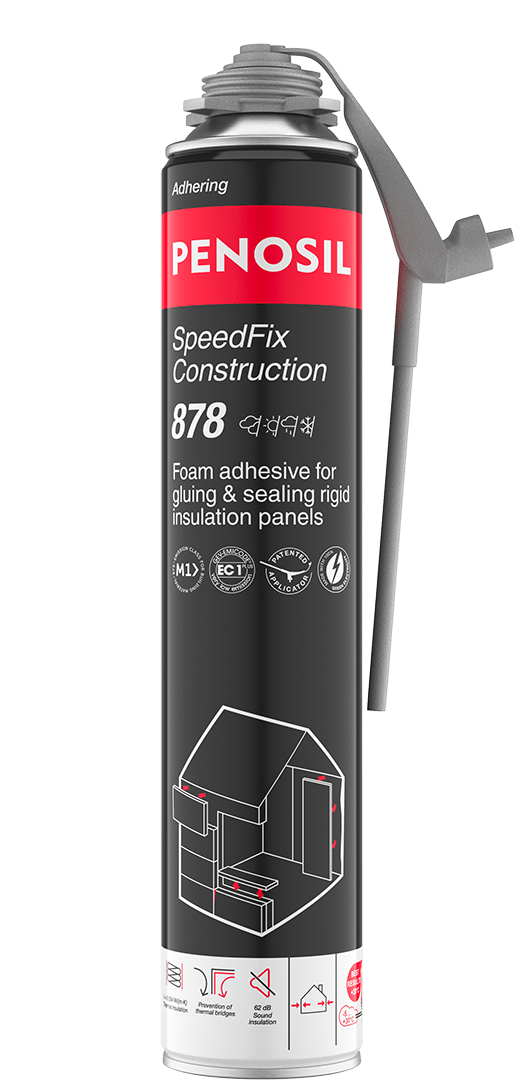
Foam adhesives have become a practical alternative to traditional mortar when installing insulation boards on facades and foundation. Compared with conventional fixing methods, foam adhesives make installation faster, cleaner and more efficient while still providing strong and durable bonding.
For ETICS facade systems in Europe, adhesive foam must have a bonding strength of at least 0.08 MPa (8 mm joint). Penosil SpeedFix Construction 878 is certified according to EOTA TR046 for ETICS facade applications and provides a bond strength of 0.12 MPa (8 mm joint).

Foam Adhesive Advantages
Versatile
The same product can be used for bonding, sealing and insulation.
Among its many applications, Penosil SpeedFix Construction 878 is also suitable for:
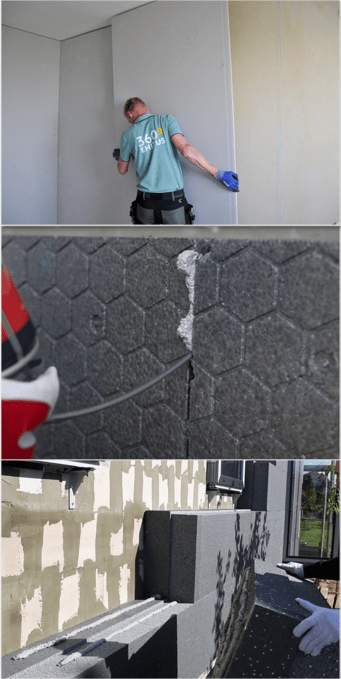
- Fixing interior wall boards
- Installing windowsills
- Building non-load-bearing interior walls
- Installing plinths, profiles, decorative and insulation boards, etc.
- Gluing door and floor finishing fillets
Fast and Easy
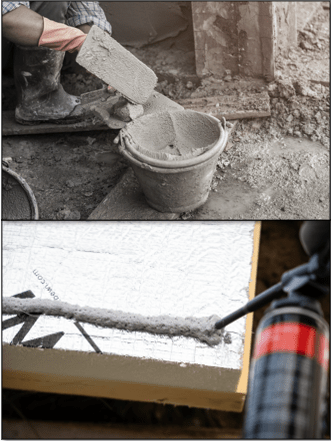
No dust, no mixing required, therefore application with foam adhesive is significantly quicker than with mortar.
Penosil SpeedFix Construction 878’s fast-curing properties (cutting time <30 min / load time approx. 2 h) make it an ideal product for external construction works.
Clean and Efficient
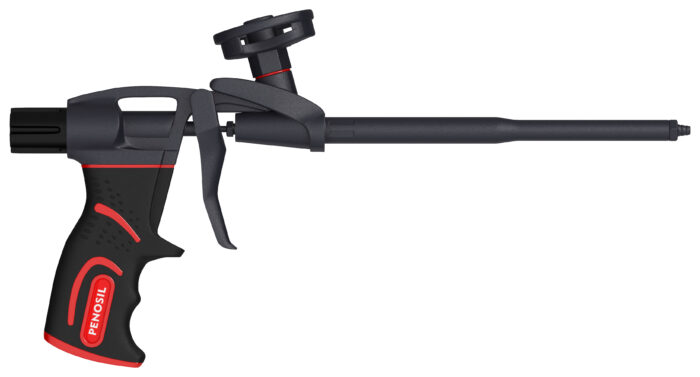
Precise application with EasyGun applicator or high-quality foam gun such as Penosil FoamGun S1, which reduces product waste.
Strong and Durable
The foam adhesive’s high froth density ensures a strong and even bond between glued surfaces.
Penosil SpeedFix Construction 878‘s excellent insulation properties (thermal conductivity: 0.033 W/(m·K) / sound reduction index: 62 dB), makes it especially well-suited for facade and foundation insulation works.
Also, the cured foam offers superior temperature resistance (–50°C to +90°C) ensuring a long-lasting bond in varying weather conditions.
| Properties |
|---|
| Shear strength (8 mm): 47 kPa |
| Bond strength (8 mm): 0,12 MPa |
| Bond strength (8 mm, at temp +5°C): 0,10 MPa |
| Bond strength (8 mm, at temp -5°C): 0,08 MPa |
| Dimensional stability: <1% |
| Post expansion: <1,5 |
Tested and Certified
Penosil SpeedFix Construction 878 has been tested by independent laboratories and has received following international certifications:
- DIN 4102-1 B2 – reaction to fire test
- EOTA TR046– adhesion test
- EMICODE® EC 1 Plus – very low emission
- M1 – low emission & odour
- French VOC class A+

How to Install Insulation Boards with Foam Adhesive
- Clean surfaces thoroughly to ensure maximum adhesion. Remove all traces of dust, grease, oil and loose particles.
- Lightly mist surfaces with water (only above 0°C) to ensure a proper curing process. Surfaces should be damp, not wet.
- When working at low temperatures, pre-warm the foam can to room temperature (about +20 °C)to ensure a proper foam structure and maximum yield.
- Always wear protective gloves and safety glasses when working with foam adhesives.
- Before use, shake the can vigorously at least 20 times to mix the components.
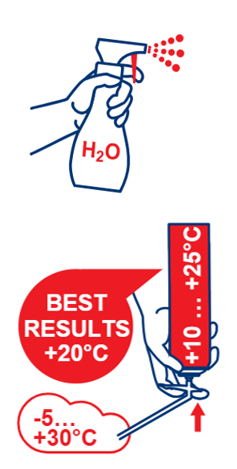
- Using a foam gun: Hold the foam can upright and screw it onto the gun while holding the adapter in place with your fingers.
- Using an EasyGun applicator: Attach the applicator tightly onto the can valve.
- Hold the can upside down during application. Dispense a small amount (1–2 sec) into a waste bin to remove air bubbles.
- Apply the foam adhesive in continuous lines on the insulation board, 3 to 4 cm from the board edge and one strip in the middle (max. 25 cm between adhesive strips), parallel to the longest side. After application, wait 2–3 minutes before pressing the board against the wall. The total bond area should be at least 40% once the surfaces have been pressed together.
- The board position can be adjusted within approximately 5-7 minutes.

- Check with a level that the board is straight and then install mechanical anchors. Foam adhesive does not replace mechanical anchoring. It is recommended to use about 6 to 8 anchors per m².
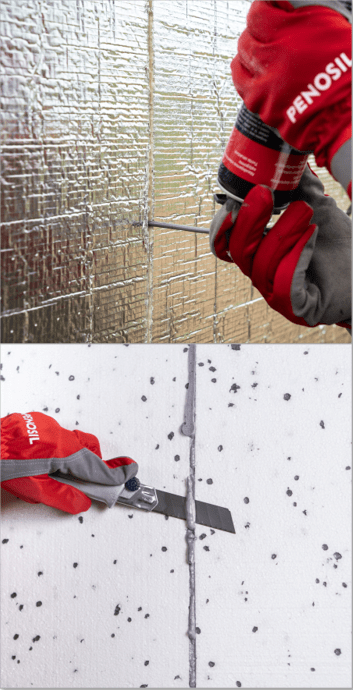
- Once the boards are installed and mechanically fixed, fill the bigger joints between the insulation boards with Penosil SpeedFix Construction 878 using the EasyGun applicator. Filling the joints between insulation boards improves the building’s thermal and sound insulation and reduces the risk of thermal bridges. When filling vertical joints, always work from bottom to top to prevent uncured foam from sagging.
- When the foam adhesive has fully cured, cut the excess foam with a knife. The insulation boards can then be covered with reinforcement mesh and subsequent facade layers.
- One 750 ml can of foam adhesive is sufficient to install insulation boards on approximately 10 m² of wall surface.
Conclusion
By replacing traditional methods for fixing facade insulation boards with foam adhesive, you can achieve faster and easier installation, lower material consumption and improved insulation performance.
Penosil SpeedFix Construction 878 provides a modern and efficient solution for professional facade insulation works. Buy it now online.