


Transparent Adhesives: Where and When to Use
14.07.2026
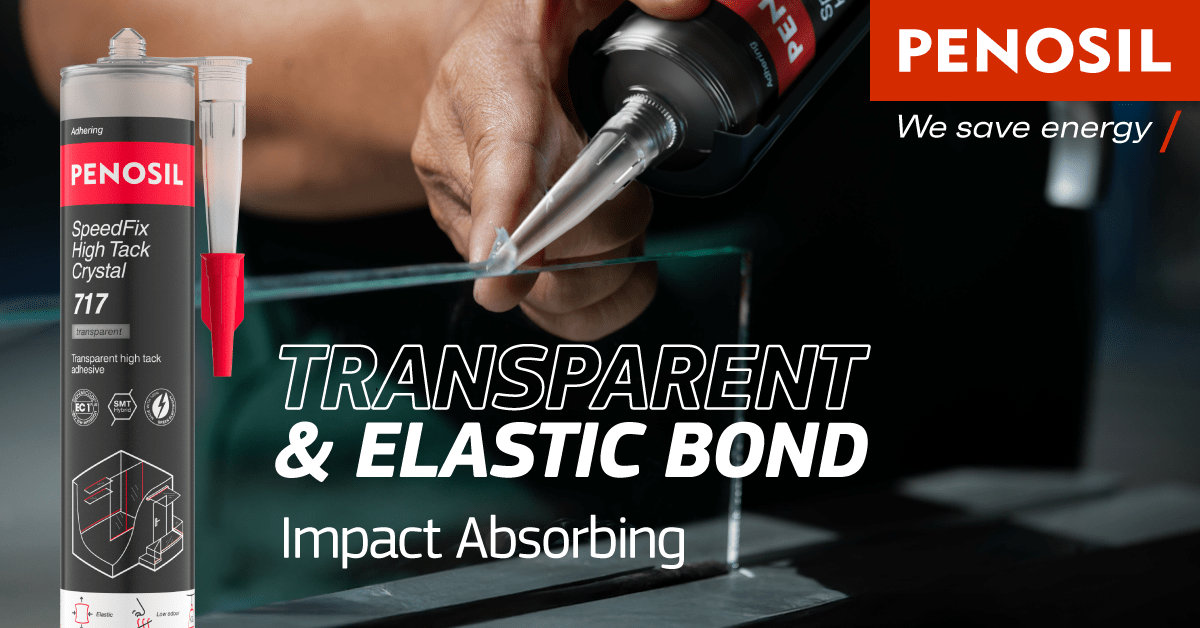
Sometimes a clean and seamless finish is essential. When visible screws, nails, or mechanical fixings would disrupt the design, transparent adhesives provide a clean, seamless, and effective alternative to traditional fastening methods.
Transparent glues create strong, durable bonds while remaining virtually invisible, making them ideal for construction, interior design, glazing, furniture manufacturing, industrial assembly, and DIY projects.
Key Benefits of Transparent Adhesives
- Invisible Bond: Discreet and clean joints with uninterrupted visual surfaces and optimal light transmission.
- Greater Design Flexibility: No need for visible mechanical fasteners, which makes structures look more refined and provides professional-looking results in architectural and decorative applications.
- Stress Distribution: Unlike mechanical fasteners, which concentrate stress at specific points, adhesives distribute loads more evenly across the bonded area.
- Compatibility with Different Materials: Most transparent adhesives bond well with a wide range of substrates, including glass, plastics, metals, ceramics, wood, etc.
- Strong and Durable Adhesion: Depending on the formulation, most transparent adhesives create a very strong, ageing- and weather-resistant bond with many materials.
When Should Transparent Adhesives Be Used?
Best Suited For:
- When Appearance Matters: Transparent adhesives are the preferred choice whenever the bonded area should remain hidden or minimally visible, as in decorative installations, architectural features, and interior applications.
- When Bonding Transparent Materials: When bonding glass, acrylic or polycarbonate materials, clear adhesives maintain transparency and avoid visual disruption.
- When Mechanical Fastening Is Difficult: Some materials are difficult to drill without cracking them or damaging their appearance. Adhesive bonding offers a non-invasive alternative.
- When Flexibility Is Important: Certain transparent adhesives such as hybrid adhesives can accommodate movements caused by thermal expansion, vibrations, and building settlement.
- When Weather Resistance Is Needed: Unlike some mechanical fasteners, most transparent adhesives remain clear and maintain a durable bond even when exposed to different weather conditions.
Not Recommended For:
- When Transparent Adhesives May Not Be the Best Choice: Although highly versatile, transparent adhesives are not suitable for every situation, the choice between adhesive bonding and mechanical fasteners always depends on the specific materials, load requirements, environmental conditions, and service life expectations.
- When Mechanical Fasteners Should be Preferred: Extremely high structural loads are involved; Immediate full-strength loading is required; The bonded surfaces are heavily contaminated; Long-term chemical exposure goes beyond the product specifications.
What Are Transparent Adhesives Used For?
Transparent glues are very versatile, and there are many scenarios in which a crystal-clear bond is needed:
- Glass Construction: Transparent adhesives are widely used for gluing interior glass partition walls, balustrades and railings, shower enclosures, and decorative glass installations.
- Design and Decoration: Depending on the type of transparent adhesive, they can be used for gluing mirrors, interior and exterior decorative panels and boards, acrylic and other transparent plastic elements, lighting fixtures, etc.
- Automotive and Electronic Components: Transparent adhesives are commonly used in vehicle manufacturing and repair, and in electronics assembly.
- Furniture Manufacturing: Transparent adhesives are widely used for building glass tables, display cabinets, decorative glass shelving, acrylic furniture, etc.
- Retail Environments: Transparent adhesives are often used for glass display cases, point-of-sale materials, professional signage, acrylic letter installations, and product showcases.
Choosing the Right Transparent Glue
The choice of which transparent adhesive to use for a particular task depends on many factors. Among the various adhesive technologies available, hybrid and solvent-based transparent adhesives are two commonly used solutions. While both can provide transparent bonding, they differ widely in their curing mechanisms, performance characteristics, and ideal application areas. Understanding these differences helps you choose the correct adhesive for your project.
Transparent Hybrid Adhesives
Hybrid adhesives combine the advantages of several polymer technologies, offering high bond strength and weather resistance. They cure through a reaction with moisture in the air and are known for their excellent balance of strength, flexibility, and durability.
Once cured, hybrid adhesives remain elastic, allowing them to absorb movements caused by thermal expansion, vibration, or building settlement. This makes them particularly suitable for joining dissimilar materials that expand and contract at different rates.
Key Advantages of Hybrid Adhesives:
- High elasticity
- Good impact- and vibration-absorbing properties
- Fast curing, with strong initial tack and high final bonding strength
- Can be used on humid surfaces
- UV-, weather-, and ageing-resistant
- Non-corrosive to metals
- Low-VOC, silicone, and solvent-free
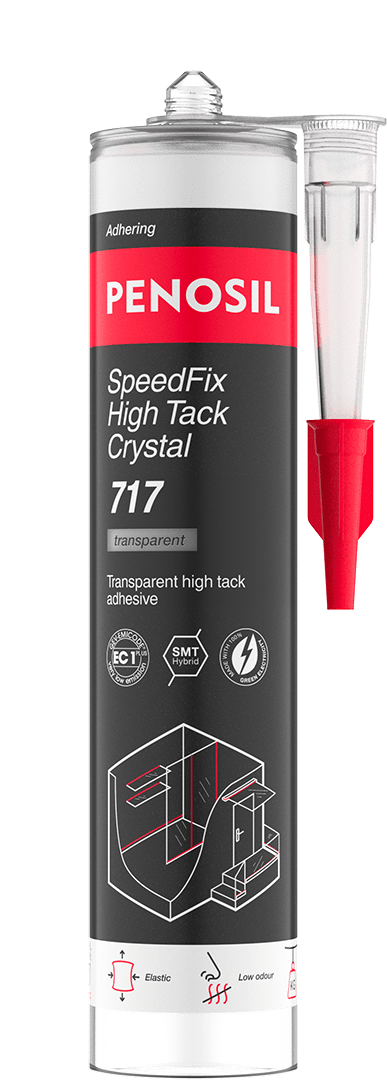
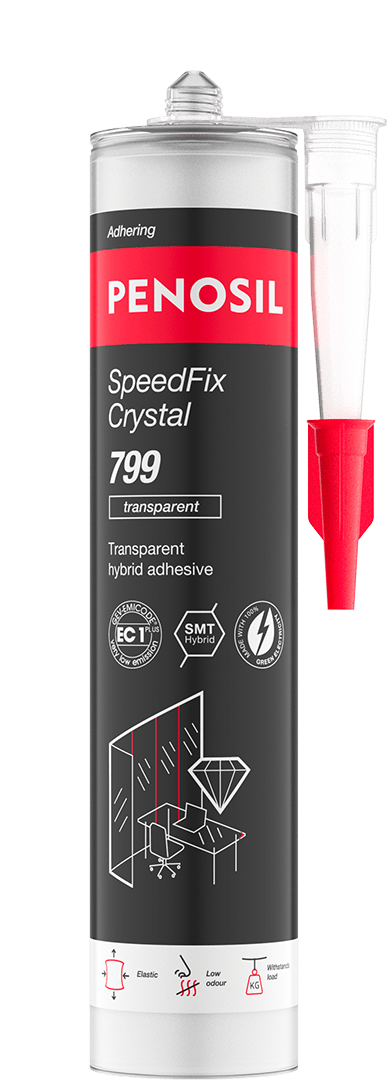
In Penosil range, our two top-performing transparent hybrid adhesives are SpeedFix High Tack Crystal 717 and SpeedFix Crystal 799. They both combine a crystal-clear appearance with powerful tack and flexibility, making them ideal choices for vertical and decorative mounting work.
The main distinction between these two adhesives is their initial tack and final bond strength. SpeedFix High Tack Crystal 717 offers higher initial tack, making it ideal for applications where immediate grab is important, and achieves a cured adhesive shear strength or gluing strength of 40 kg/cm². SpeedFix Crystal 799, on the other hand, provides the highest gluing strength in our transparent hybrid adhesive range, reaching 43 kg/cm² once fully cured.
What Are Transparent Hybrid Adhesives Used For?
Transparent hybrid adhesives are ideal for interior and exterior gluing and sealing work, where an extra-fast, strong, and elastic bond is required, for example:
- Installing glass panels and partition walls
- Installing transparent decorative elements
- Fixing plinths, profiles, skirting boards, windowsills, roof tiles, insulation and decorative panels, etc.
- Gluing uneven surfaces and metal-to-metal bonding
- Glass-to-metal bonding; gluing together glass furniture elements such as glass tabletops on metal legs, etc.
- Installing exterior facade features; weather-exposed decorative features such as glass balustrades, roofs, etc.
Hybrid adhesives are highly versatile glues, and because they remain flexible over time, they are often preferred for work involving a wide variety of dissimilar materials and demanding environments.
Read more about hybrid adhesives here: The Future of Adhesives: Hybrid Sealing & Bonding Technology
Transparent Solvent-Based Adhesives
Solvent-based adhesives cure through solvent evaporation, creating a strong, rigid, and durable bond.
They are particularly valued for their rapid curing speed, high initial strength and the ability to perform in demanding conditions such as constant exposure to chemicals, heat, and aggressive substrates.
Key Advantages of Solvent-Based Adhesives:
- Contact adhesive: forms an immediate, rigid, and strong bond
- Extra-fast and strong bond with difficult-to-bond materials such as plastics
- Precision bonding; due to solvent evaporation, the final cured glue layer will be much thinner and neater
- Does not require primers
- Excellent resistance to chemicals and temperature variations
- Cost-effective bonding solution
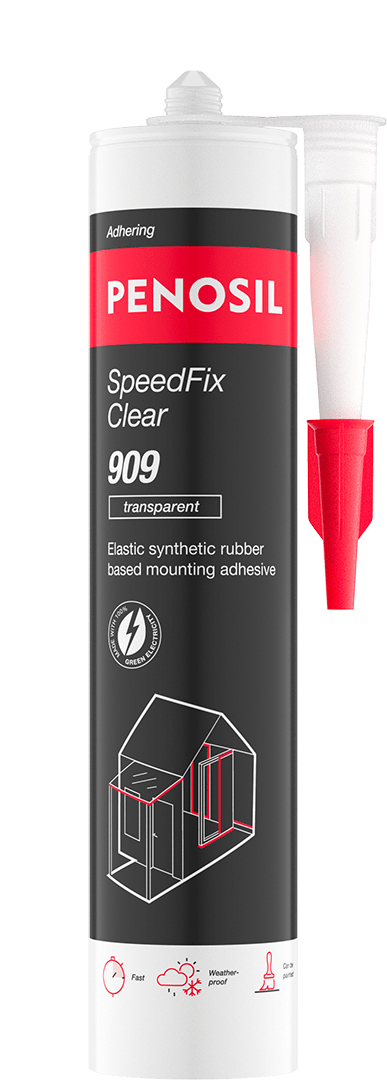
In our product range, Penosil SpeedFix Clear 909, a transparent solvent-based adhesive with a gluing strength of 37 kg/cm², offers an immediate and strong bond with “difficult-to-bond” materials such as PVC and other plastics. In addition, this solvent-based adhesive can be used for contact bonding. This means that the bonded surfaces achieve a very strong initial bond after they are pressed together.
What Are Transparent Solvent-Based Adhesives Used For?
Solvent-based transparent adhesives are commonly used for work where an instant strong bond is required, they are best suited to the following tasks:
- Installing heavy-duty interior fixings
- Gluing structural decorative elements
- Installing construction elements such as skirting boards, panels, floor and door trims, etc.
- Gluing mouldings, strips, profiles, railings, mailboxes, signs, etc., in interior and exterior applications
- Bonding acrylic and other plastic elements together, including installing transparent plastic roofs and walls
Solvent-based adhesives are most sought after for their ability to develop strength quickly with difficult-to-bond materials, making them ideal for urgent repairs and fast-paced installations.
A Short Comparison: Hybrid vs. Solvent-Based Adhesives
| HYBRID ADHESIVES | SOLVENT-BASED ADHESIVES | |
|---|---|---|
| Transparency | Crystal-clear | Crystal-clear |
| Elasticity | Excellent flexibility and elasticity, absorbs vibrations and structural movements | Non-elastic, cures into a hard, rigid bond |
| Initial Tack | High | Very high, contact adhesive |
| Open Time | 10 min | 10 min |
| Curing Speed | 2 to 3 mm in 24 h | 2 to 3 mm in 24 h |
| Bond Strength | Excellent | Excellent, good resistance to mechanical stress |
| Usage Temperature | +5 °C to +40 °C | +5 °C to +30 °C |
| Temp. Resistance of Cured Adhesive | -40 °C to +80 °C | -20 °C to +50 °C |
| Material Compatibility | Concrete Masonry Wood MDF Chipboard Plasterboard Construction panels Plaster Aluminium Galvanised steel Ceramics Glass Fibreglass EPDM Polycarbonate | Concrete Masonry Wood MDF Chipboard Plasterboard Construction panels Plaster Aluminium Steel Ceramics Glass Fibreglass EPDM Rigid PVC Polyester Window tapes Self-levelling compounds Stone |
| Indoor / Outdoor Use | Indoor & outdoor use | Indoor & outdoor use |
| Weather and UV Resistance | Excellent UV, moisture, ageing and weather resistance | Good weatherproof properties |
| Durability | Excellent long-term durability | Strong, rigid, and durable bond |
| Chemical Resistance | Good | Excellent, very strong resistance to chemicals |
| Can be Used on Humid Surfaces | Yes | No |
| Can be Painted | Yes | Yes |
| VOC Content | Low-VOC, EC1+ certified, safer for indoor use | Contains volatile organic compounds (VOCs), may require adequate ventilation during application |
| Price | Higher | Lower |
| Best For | 1. Bonding movable objects. 2. Outdoor installation work. 3. Situations where different types of materials need to be bonded together. | 1. Bonding objects that need to have a rigid connection. 2. When instant bond is needed. 3. For price-sensitive projects. 4. Situations where difficult-to-adhere materials need to be bonded together, such as plastics and PVC. |
*Before making the final product choice, we highly recommend consulting the products’ technical data sheets on our website. Moreover, due to the wide variety of construction materials, we always recommend conducting a preliminary compatibility test.
Frequently Asked Questions
Based purely on shear strength or adhesive gluing strength, the strongest transparent adhesive in the Penosil portfolio is SpeedFix Crystal 799 with a shear strength of 43 kg/cm². It is a versatile hybrid adhesive that provides a fast, strong, and elastic bond.
Waterproof transparent glue is excellent for installing and fixing exterior decorative elements such as balustrades, railings, small glass roofs, tables, etc.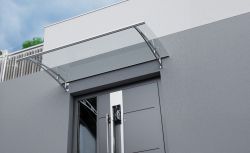
What is the fastest grabbing transparent glue in Penosil range?
Penosil SpeedFix Clear 909 provides the fastest initial grab and an almost immediate bond.
Solvent-based adhesives such as Penosil SpeedFix Clear 909 form a strong connection with “difficult-to-bond” materials, e.g. PVC, acrylics, and other plastics.
This is primarily because the solvent inside the glue softens the surfaces of the plastic materials, allowing them to bond more effectively. Therefore, the connection might be stronger than with a hybrid adhesive.
Uncured or fresh glue can be easily cleaned with solvents such as white spirit, acetone, or special cleaning wipes.
However, it is much more difficult to remove cured or dried glue. The only way to remove dried glue is mechanically. A sealant remover such as Penosil Sealant Remover 990 helps to soften the dried glue, but scraping, rubbing, or sanding with an appropriate tool must be used to remove dried glue.
1. Cut off the tip of the cartridge.
2. Screw on the nozzle and cut an opening.
3. Load the cartridge into a sealant gun.
4. Maintain even pressure on the gun trigger and draw the nozzle smoothly along the surface.
5. Depending on the surface size and shape, apply the adhesive either in a zigzag, straight, or dotted pattern.
6. Immediately press the surfaces together and apply pressure until the product is fully cured.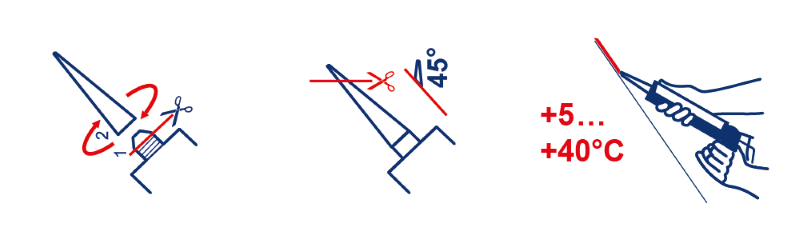
1. Load the package into the foil-pack gun.
2. Snip the top off the foil package, just below the metal clip.
3. Screw on the nozzle with the cap.
4. Cut an opening in the nozzle.
5. Apply the adhesive by keeping an even pressure at the gun trigger and smoothly dragging the nozzle along the surface.
6. Depending on the surface size and shape, apply the adhesive either in a zigzag, straight or dotted pattern.
7. Immediately press the surfaces together and apply pressure until the product is fully cured.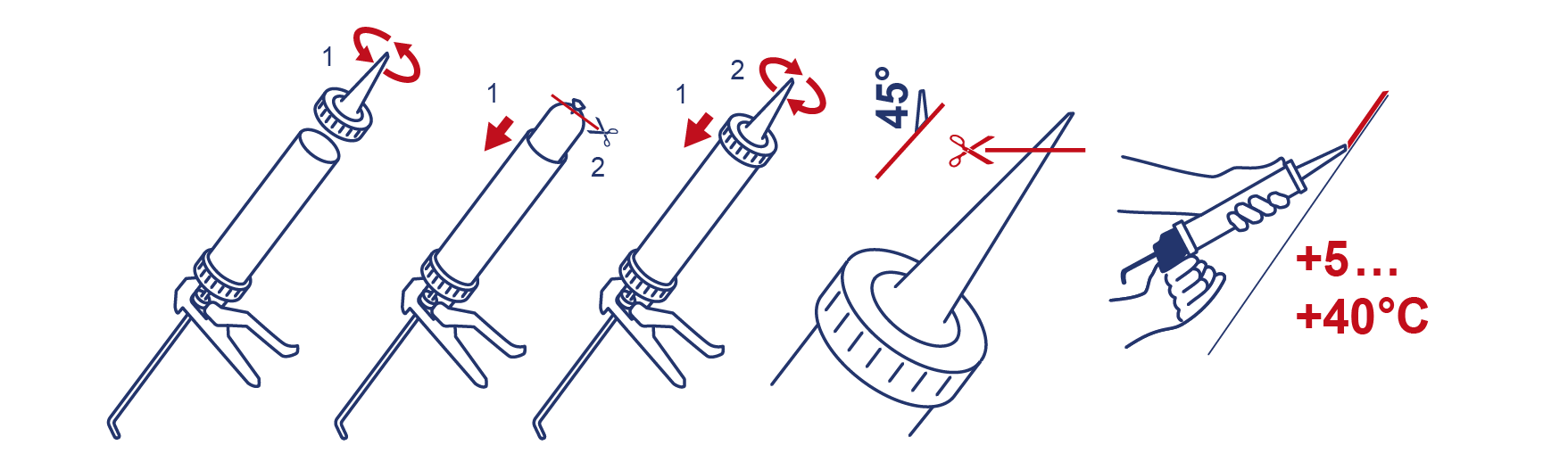
– In exterior applications, the adhesive should be applied either in a vertical or dotted pattern to allow any water to drain from the adhesive joint.
– Use a dotted or zigzag pattern when applying hybrid or solvent-based adhesives. These patterns reduce adhesive consumption and prevent the adhesive from being squeezed out of the joint.
– When installing skirting boards at corners, use a straight-line pattern.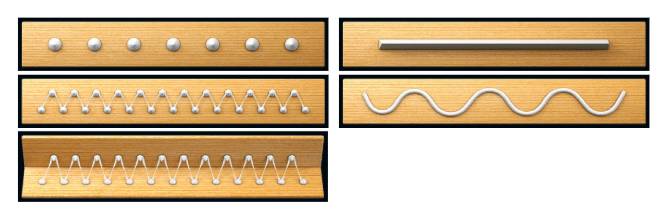
Generally, we recommend using hybrid adhesives for outdoor gluing work due to their weatherproof and elastic properties. In Penosil range, our strongest transparent adhesive for outdoor use is SpeedFix Crystal 799.
All our transparent glues are available in our e-shop.
You can also find where our products are sold by going to the “Where to Buy” section at the bottom of Penosil website. Just select your location from the drop-down menu and check on the map which retailers sell our products in your area.
Contact bonding is a gluing process used for solvent-based adhesives such as Penosil SpeedFix Clear 909. This process involves applying glue to one or both surfaces, letting the solvent evaporate a little, and then pressing them together. With this method, a strong bond is created almost immediately.
Another way of creating a contact bond with solvent-based adhesives is to apply the glue to one or both surfaces, press them together immediately, separate them briefly to let the solvent flash off, and then press them together again.
Conclusion
Transparent adhesives offer a unique combination of functionality and versatility. Their ability to achieve seamless, professional results quickly, with little effort and without visible fixings makes them a preferred choice for applications involving glass, plastics, and decorative surfaces.
While both hybrid and solvent-based transparent adhesives provide excellent clarity and strong adhesion, the right product choice depends on the project requirements. SpeedFix Clear 909 is an excellent transparent mounting adhesive for everyday construction work where a rigid and instant bond is needed, while SpeedFix Crystal 799 and SpeedFix High Tack Crystal 717 are premium choices when maximum durability, weather resistance, and solvent-free performance are required.
Choosing the right adhesive for the application ensures both performance and a flawless finish that keeps the focus on the design – not the bond.
Read our other educational articles about adhesives: