


Frequently asked questions
PU-Foams
1 m2 of cured foam with thickness of 3 cm.
PENOSIL EasySpray Foam 111 foam expands twofold. For example, when applying 1,5 cm layer of foam, it will expand into 3 cm.
Please check the tutorial video in Penosil Official Youtube channel or take a look on the PENOSIL EasySpray Foam 111 Technical Data Sheet. You will also find useful information on the product package.
We recommend to cover the foam within a few days after curing to prevent damage by UV-light and sunlight.
No, the foams are not UV-resistant and they need to be covered with suitable opaque sealant, filler, paint or other material.
Yes, please check the TDS or the product package for further information.
Yes, the cured foam can be cleaned mechanically with a scraper.
Yes, the foam can be used outdoor, but it must be protected from weather conditions.
With PENOSIL foams it is recommended to use Penosil foamguns which are specially developed to ensure best foam application results.
Make sure the foam is fully cured. Use a sharp knife for best results.
We recommended to moisten the dry substrates to ensure better results. Slightly spray the substrate with water and make sure there are no water droplets on the surface before applying the foam. Do not spray substrates with water in subzero temperature, as the water may freeze and worsen adhesion.
PENOSIL product range offers special foams to use in subzero temperature. First, choose the suitable product that covers necessary application temperature range. Notice that the foam can temperature must be above +5 °C and in some cases even higher, please check the TDS or product package for more information. It is recommended to warm the foam can with water or air (max. +30 °C) before starting work in low temperatures.
Always use supports to secure the door frames. We recommend to use low expansion foams to avoid deformation of the door frames. Usually the gunfoams provide lower expansion than the strawfoams.
Yes.
Yes.
Best product for this is Penosil EasySpray 111. Start with one layer and add as many as needed.
All PU foams can be used outdoors in accordance with the application temperatures indicated on the label, but they are sensitive to UV-radiation and must be covered with opaque material.
Usually cured foam can be removed mechanically but Penosil Foam Remover 995 can be used to soften the cured foam.
In general foams with higher density also have higher mechanical strength. Straw foams usually have stronger body than gunfoams.
In general straw foams expand more than gunfoams.
Yes, Penosil EasySpray 111 can be considered a breathable material.
Sealants
Yes, the silicones are considered to have the best UV-resistance amongst the main type of sealants available on the market today.
The discoloration of sealants happens mainly due to the contact of adjacent materials (migration), chemical vapours and fluids. Since in real life applications it is almost impossible to avoid the contact with different vapours and fluids, there is always a risk for discoloration of the sealant. In general, the acetoxy silicones and the acrylic sealants are less sensitive to yellowing when in contact with chemical vapours and fluids, compared to neutral silicones.
It is difficult to predict the lifetime of the sealed joints, since it depends on many variables that are out of our control. Application conditions, installation techniques, exploitation conditions after curing – these are just some of the important variables that determine the lifetime of a sealant joint. In order to ensure the longevity of the sealed joints the sealants should be applied and maintained regularly according to the guidelines listed in our manuals
No, the silicone sealants are not overpaintable, since the paint does not adhere to the silicone surface. Among sealants, the overpaintable products are typically acrylic sealants, hybrid sealants and polyurethane (PU) sealants. The hybrid and polyurethane technologies can be painted over only with water-based products and we always recommend preliminary test, prior to the actual application.
LightFiller 620 is best for fast-drying non-shrinking acrylic dispersion-based lightweight filler for repairing and filling cracks and holes.
Adhesives
For this application we recommend PENOSIL MembraneFix 629.
Yes. More information is available in our facade insulation manuals.
It is not recommended to use this product on bituminous surfaces. In some cases, e.g. fixing insulation boards on bitumen treated foundations before backfilling, the product has sufficient adhesion. Always test prior to the actual use.
For one or more of the following reasons:
The substrate is not clean
The substrate is frozen or under the recommended installation temperature.
The substrate is moisturous.
PENOSIL Prime&Fix 900 cannot be used for adhering. This product is used to prepare the tacky surface so that the window tape can have better adhesion to the substrate.
Penosil Polystyrol FixFoam 877 is mainly designed for fixing insulation boards, offering good adhesion combined with thermal and sound insulation.
Penosil SpeedFix Construction 878 is a more versatile adhesive foam with strong structural performance to wider material compatibility, making it suitable for broader use in construction.
Penosil Fast Foam Adhesive 888 focuses on speed and efficiency, curing about twice as fast and giving higher yield. Therefore, ideal for quick and high-volume jobs with usage similar to 878.
Caulking materials
Expanding tape is used mainly in joint sealing application. Depending on the type of expanding tape, but there are three main classifications
- Internal use.
- External use when the expanding tape must be covered with another material.
- External use without any covering.
It depends on the project and the preferences. The expanding tape’s advantage is that the installation is easier and faster. The facade sealant is suitable for tougher climate conditions.
Guidelines on, how to use expanding tape are available in the technical datasheet(TDS).
The window tape must be covered within three months after installation.
Information is available inside the product package and on the technical datasheet(TDS).
You can also find instruction videos on the PENOSIL YouTube channel.
Surface Treatments
Mastic is more used in renovation process, where windows are already installed.
The minimum coverage is 1,1 kg/m2 (covering in 2 layers).
Cleaners
Uncured foam can be cleaned using PENOSIL Foam Cleaner 929. Cured foam can be removed mechanically.
Use PENOSIL Cleaning Wipes 941 to clean surfaces from uncured sealant.
PENOSIL Foam Cleaner 929 can be used to clean uncured PU foam from surfaces. The Foam Cleaner can also be used for cleaning the foamgun after the foam application. For cleaning the foamgun, screw the canister on the gun and press the gun trigger. Please refer to the TDS or the product package for more information.
Sustainable Construction
In addition to the usual range of chemicals, the formulas of the ECO products contain various components, the synthesis of which many has different possibilities for the use of renewable or recycled raw materials, as well as for the use of waste. The following options are implemented in the manufacture of some of the main chemicals:
- Use of post-consumer recycled materials
- Plant-based feedstock (instead of crude oil)
- Mass-balance approach – certified consumption of bio-waste and residues in the chemical production process.
The overall content of sustainable materials for specific formula consists of relative shares of recycled/renewable/waste material quantities in used raw materials.
- The formulas are in large part (50–81 %, depending on the product) made from sustainable raw materials using the latest technologies available in the field.
- The packages are the most sustainable on the market, made of PCR (post-consumer recycled) plastic and metal which is produced with three times lower CO2 than regular packaging.
- Genuinely ecological products also offer superb product features; sustainability has been achieved without any compromise on product properties. In fact, the opposite is true, they offer the best user experience.
It means a new climate-friendly steel with reduced CO2 intensity. The material properties do not differ from existing steel grades, aside from their reduced specific CO2 emissions.
Penosil´s ECO cartridges are made from PCR (post-consumer recycled) plastic. This means that the material consists of plastic waste, with the different colours all mixed together. This mix cannot be white, it is usually dark grey, or black if black pigment is added. Penosil´s ECO products come in dark grey cartridges.
Due to the use of bio-based raw materials instead of regular ones, the tone of the adhesive is light beige.
Sustainable raw materials of ecological acrylic are chemically identical to conventional ones, just processed differently. Therefore, the colour is bright white, as generally the case for acrylics.
EasyPRO
1 m2 of cured foam with thickness of 3 cm.
PENOSIL EasySpray foam expands twofold. For example, when applying 1,5 cm layer of foam, it will expand into 3 cm.
In order to achieve the best possible result, we recommend to use masking tapes. Our experience shows, that even in the hands of the most experienced craftsman, there is a possibility that a thin layer of sealant reaches between the spatula and sealing surface and as a result can stain the adjacent surfaces. Using masking tapes, helps to avoid this risk. More information about the correct application of sealants can be found in our Sanitary Manual.
Please check the tutorial video in Penosil Official Youtube channel or take a look on the PENOSIL EasySpray Sell Sheet. You will also find useful information on the product package.
Product labels
 The European Union sets requirements for all manufacturers who are selling their products inside the free trade area. The EU has introduced The Construction Products Regulation (CPR) 305/2011, which came fully into effect on 1st of July 2013, which key concept is the Declaration of Performance – or as it is simpler called – DoP. The producing of the DoP became compulsory to all manufacturers whose product portfolio includes products covered by a Harmonised European Standard (hEN). The DoP gives the producer the opportunity to deliver the information about characteristics of its product and by drawing the document up the manufacturer assures the conformity of the construction product with the declared performance.
After the manufacturer has drawn up the DoP, the product has to be CE marked. The CE marking is a certification mark that may be called as the little summary of the DoP. The CE mark therefore shows that the products sold in the EEA meet high safety, health and environmental protection requirements set in the hEN (Harmonised European Standard).
For all the Penosil products that fall within the scope of any harmonized European Standard, the DoP and CE marking has been affixed according to the instructions.
Volatile organic compounds (VOCs) are a set of substances belonging to different chemical classes that easily evaporate at room temperature and spread from materials and products into the surroundings. VOCs particularly affect indoor air quality. More than 300 different volatile organic compounds have been identified and many of them are primarily found indoors. They degas from construction materials, furniture, etc. If the content of VOCs is too high, a poor indoor environment can have different health effects. Breathing low levels of VOCs for longer periods of time can cause irritation and may increase risk of health problems, some of the substances are carcinogenic.
The houses are built ever more airtight to save energy therefore the question to reduce VOC level indoor has become important topic and requirements have been set for the chemicals used indoors. As the European Union has not yet introduced overall regulation the countries are regulating the VOCs degassing concentration by themselves to protect health. In Europe, there are 3 main classifications that proof the low VOC of building materials and therefore offer customer a better indoor environment:
- The Emicode classification
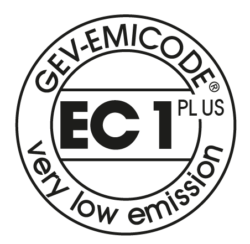 EMICODE® is the name of a classification system protected by trademark, which is used to classify flooring installation products, adhesives and construction products into the three classes according to their emission characteristics. The system has 3 emission categories with certain limit values for VOCs – EC2, EC1 and EC1 plus. Emicode label is widely known and recognized all over the Europe.
- The M1-classification
 The aim of the classification is to enhance the development and use of low-emitting building materials so that material emissions do not increase the requirement for ventilation. The classification presents emission requirements for the materials used in ordinary work spaces and residences with respect to good indoor air quality. M1-label on the product tells that the product complies with the M1-criteria for emission and odour. M1 label is mostly recognized in Finland and Scandinavia.
- French VOC label
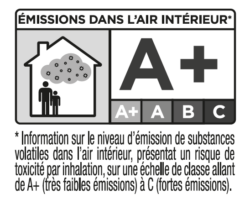 Construction products, decoration and furnishing products to be traded in France are to be labelled with an emissions classification on the basis of VOC emissions tests. This is stated in the “Décret n° 2011-321”. The Decree no. 3011-321 sets 4 emissions classes of the VOC emissions – C, B, A and A+.
Penosil offers variety of products that have been tested and certified by all 3 of the classifications mentioned above.
Search Results
PU-Foams
1 m2 of cured foam with thickness of 3 cm.
PENOSIL EasySpray Foam 111 foam expands twofold. For example, when applying 1,5 cm layer of foam, it will expand into 3 cm.
Please check the tutorial video in Penosil Official Youtube channel or take a look on the PENOSIL EasySpray Foam 111 Technical Data Sheet. You will also find useful information on the product package.
We recommend to cover the foam within a few days after curing to prevent damage by UV-light and sunlight.
No, the foams are not UV-resistant and they need to be covered with suitable opaque sealant, filler, paint or other material.
Yes, please check the TDS or the product package for further information.
Yes, the cured foam can be cleaned mechanically with a scraper.
Yes, the foam can be used outdoor, but it must be protected from weather conditions.
With PENOSIL foams it is recommended to use Penosil foamguns which are specially developed to ensure best foam application results.
Make sure the foam is fully cured. Use a sharp knife for best results.
We recommended to moisten the dry substrates to ensure better results. Slightly spray the substrate with water and make sure there are no water droplets on the surface before applying the foam. Do not spray substrates with water in subzero temperature, as the water may freeze and worsen adhesion.
PENOSIL product range offers special foams to use in subzero temperature. First, choose the suitable product that covers necessary application temperature range. Notice that the foam can temperature must be above +5 °C and in some cases even higher, please check the TDS or product package for more information. It is recommended to warm the foam can with water or air (max. +30 °C) before starting work in low temperatures.
Always use supports to secure the door frames. We recommend to use low expansion foams to avoid deformation of the door frames. Usually the gunfoams provide lower expansion than the strawfoams.
Yes.
Yes.
Best product for this is Penosil EasySpray 111. Start with one layer and add as many as needed.
All PU foams can be used outdoors in accordance with the application temperatures indicated on the label, but they are sensitive to UV-radiation and must be covered with opaque material.
Usually cured foam can be removed mechanically but Penosil Foam Remover 995 can be used to soften the cured foam.
In general foams with higher density also have higher mechanical strength. Straw foams usually have stronger body than gunfoams.
In general straw foams expand more than gunfoams.
Yes, Penosil EasySpray 111 can be considered a breathable material.
Sealants
Yes, the silicones are considered to have the best UV-resistance amongst the main type of sealants available on the market today.
The discoloration of sealants happens mainly due to the contact of adjacent materials (migration), chemical vapours and fluids. Since in real life applications it is almost impossible to avoid the contact with different vapours and fluids, there is always a risk for discoloration of the sealant. In general, the acetoxy silicones and the acrylic sealants are less sensitive to yellowing when in contact with chemical vapours and fluids, compared to neutral silicones.
It is difficult to predict the lifetime of the sealed joints, since it depends on many variables that are out of our control. Application conditions, installation techniques, exploitation conditions after curing – these are just some of the important variables that determine the lifetime of a sealant joint. In order to ensure the longevity of the sealed joints the sealants should be applied and maintained regularly according to the guidelines listed in our manuals
No, the silicone sealants are not overpaintable, since the paint does not adhere to the silicone surface. Among sealants, the overpaintable products are typically acrylic sealants, hybrid sealants and polyurethane (PU) sealants. The hybrid and polyurethane technologies can be painted over only with water-based products and we always recommend preliminary test, prior to the actual application.
LightFiller 620 is best for fast-drying non-shrinking acrylic dispersion-based lightweight filler for repairing and filling cracks and holes.
Adhesives
For this application we recommend PENOSIL MembraneFix 629.
Yes. More information is available in our facade insulation manuals.
It is not recommended to use this product on bituminous surfaces. In some cases, e.g. fixing insulation boards on bitumen treated foundations before backfilling, the product has sufficient adhesion. Always test prior to the actual use.
For one or more of the following reasons:
The substrate is not clean
The substrate is frozen or under the recommended installation temperature.
The substrate is moisturous.
PENOSIL Prime&Fix 900 cannot be used for adhering. This product is used to prepare the tacky surface so that the window tape can have better adhesion to the substrate.
Penosil Polystyrol FixFoam 877 is mainly designed for fixing insulation boards, offering good adhesion combined with thermal and sound insulation.
Penosil SpeedFix Construction 878 is a more versatile adhesive foam with strong structural performance to wider material compatibility, making it suitable for broader use in construction.
Penosil Fast Foam Adhesive 888 focuses on speed and efficiency, curing about twice as fast and giving higher yield. Therefore, ideal for quick and high-volume jobs with usage similar to 878.
Caulking materials
Expanding tape is used mainly in joint sealing application. Depending on the type of expanding tape, but there are three main classifications
- Internal use.
- External use when the expanding tape must be covered with another material.
- External use without any covering.
It depends on the project and the preferences. The expanding tape’s advantage is that the installation is easier and faster. The facade sealant is suitable for tougher climate conditions.
Guidelines on, how to use expanding tape are available in the technical datasheet(TDS).
The window tape must be covered within three months after installation.
Information is available inside the product package and on the technical datasheet(TDS).
You can also find instruction videos on the PENOSIL YouTube channel.
Surface Treatments
Mastic is more used in renovation process, where windows are already installed.
The minimum coverage is 1,1 kg/m2 (covering in 2 layers).
Cleaners
Uncured foam can be cleaned using PENOSIL Foam Cleaner 929. Cured foam can be removed mechanically.
Use PENOSIL Cleaning Wipes 941 to clean surfaces from uncured sealant.
PENOSIL Foam Cleaner 929 can be used to clean uncured PU foam from surfaces. The Foam Cleaner can also be used for cleaning the foamgun after the foam application. For cleaning the foamgun, screw the canister on the gun and press the gun trigger. Please refer to the TDS or the product package for more information.
Sustainable Construction
In addition to the usual range of chemicals, the formulas of the ECO products contain various components, the synthesis of which many has different possibilities for the use of renewable or recycled raw materials, as well as for the use of waste. The following options are implemented in the manufacture of some of the main chemicals:
- Use of post-consumer recycled materials
- Plant-based feedstock (instead of crude oil)
- Mass-balance approach – certified consumption of bio-waste and residues in the chemical production process.
The overall content of sustainable materials for specific formula consists of relative shares of recycled/renewable/waste material quantities in used raw materials.
- The formulas are in large part (50–81 %, depending on the product) made from sustainable raw materials using the latest technologies available in the field.
- The packages are the most sustainable on the market, made of PCR (post-consumer recycled) plastic and metal which is produced with three times lower CO2 than regular packaging.
- Genuinely ecological products also offer superb product features; sustainability has been achieved without any compromise on product properties. In fact, the opposite is true, they offer the best user experience.
It means a new climate-friendly steel with reduced CO2 intensity. The material properties do not differ from existing steel grades, aside from their reduced specific CO2 emissions.
Penosil´s ECO cartridges are made from PCR (post-consumer recycled) plastic. This means that the material consists of plastic waste, with the different colours all mixed together. This mix cannot be white, it is usually dark grey, or black if black pigment is added. Penosil´s ECO products come in dark grey cartridges.
Due to the use of bio-based raw materials instead of regular ones, the tone of the adhesive is light beige.
Sustainable raw materials of ecological acrylic are chemically identical to conventional ones, just processed differently. Therefore, the colour is bright white, as generally the case for acrylics.
EasyPRO
1 m2 of cured foam with thickness of 3 cm.
PENOSIL EasySpray foam expands twofold. For example, when applying 1,5 cm layer of foam, it will expand into 3 cm.
In order to achieve the best possible result, we recommend to use masking tapes. Our experience shows, that even in the hands of the most experienced craftsman, there is a possibility that a thin layer of sealant reaches between the spatula and sealing surface and as a result can stain the adjacent surfaces. Using masking tapes, helps to avoid this risk. More information about the correct application of sealants can be found in our Sanitary Manual.
Please check the tutorial video in Penosil Official Youtube channel or take a look on the PENOSIL EasySpray Sell Sheet. You will also find useful information on the product package.
Product labels
The European Union sets requirements for all manufacturers who are selling their products inside the free trade area. The EU has introduced The Construction Products Regulation (CPR) 305/2011, which came fully into effect on 1st of July 2013, which key concept is the Declaration of Performance – or as it is simpler called – DoP. The producing of the DoP became compulsory to all manufacturers whose product portfolio includes products covered by a Harmonised European Standard (hEN). The DoP gives the producer the opportunity to deliver the information about characteristics of its product and by drawing the document up the manufacturer assures the conformity of the construction product with the declared performance.
After the manufacturer has drawn up the DoP, the product has to be CE marked. The CE marking is a certification mark that may be called as the little summary of the DoP. The CE mark therefore shows that the products sold in the EEA meet high safety, health and environmental protection requirements set in the hEN (Harmonised European Standard).
For all the Penosil products that fall within the scope of any harmonized European Standard, the DoP and CE marking has been affixed according to the instructions.
Volatile organic compounds (VOCs) are a set of substances belonging to different chemical classes that easily evaporate at room temperature and spread from materials and products into the surroundings. VOCs particularly affect indoor air quality. More than 300 different volatile organic compounds have been identified and many of them are primarily found indoors. They degas from construction materials, furniture, etc. If the content of VOCs is too high, a poor indoor environment can have different health effects. Breathing low levels of VOCs for longer periods of time can cause irritation and may increase risk of health problems, some of the substances are carcinogenic.
The houses are built ever more airtight to save energy therefore the question to reduce VOC level indoor has become important topic and requirements have been set for the chemicals used indoors. As the European Union has not yet introduced overall regulation the countries are regulating the VOCs degassing concentration by themselves to protect health. In Europe, there are 3 main classifications that proof the low VOC of building materials and therefore offer customer a better indoor environment:
- The Emicode classification
EMICODE® is the name of a classification system protected by trademark, which is used to classify flooring installation products, adhesives and construction products into the three classes according to their emission characteristics. The system has 3 emission categories with certain limit values for VOCs – EC2, EC1 and EC1 plus. Emicode label is widely known and recognized all over the Europe.
- The M1-classification
The aim of the classification is to enhance the development and use of low-emitting building materials so that material emissions do not increase the requirement for ventilation. The classification presents emission requirements for the materials used in ordinary work spaces and residences with respect to good indoor air quality. M1-label on the product tells that the product complies with the M1-criteria for emission and odour. M1 label is mostly recognized in Finland and Scandinavia.
- French VOC label
Construction products, decoration and furnishing products to be traded in France are to be labelled with an emissions classification on the basis of VOC emissions tests. This is stated in the “Décret n° 2011-321”. The Decree no. 3011-321 sets 4 emissions classes of the VOC emissions – C, B, A and A+.
Penosil offers variety of products that have been tested and certified by all 3 of the classifications mentioned above.